
The Midder Dye
Have you ever been to Shetland? Part I

I’m sorry I’ve been quiet so long, I’ve been living a monkish life over a (seemingly never-ending) manuscript. But having just returned from several weeks walking across the Shetlands with my old fella, I thought no better subject to get back into it with. I hope you enjoy.
A quick update on the hitchhiking book, too. The manuscript is very nearly there and I’m working with my agent to polish up the proposal and pitch in the next few weeks. So keep your thumbs crossed and your ears open. Hopefully more to come soon!
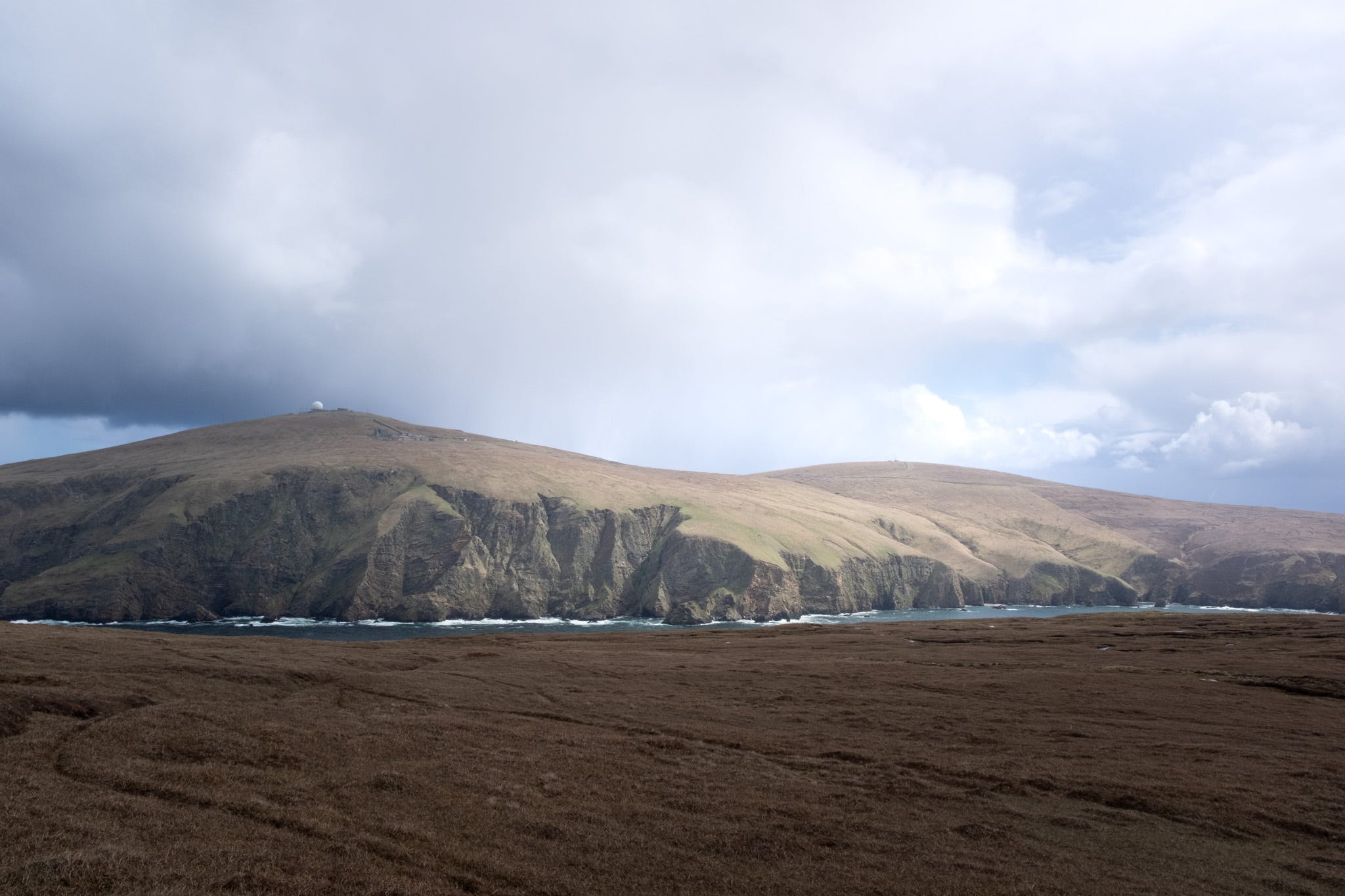
Hermaness is the very top. Where the last of the Atlantic archipelago is finally swallowed by the sea. No land north of here until Russia, the other side of the globe. Except that is for Muckle Flugga.
They say the rock was formed when two giants, Herman and Saxa, fell in love with the same mermaid. They hurled great rocks at each other to win her affection but the mermaid said she’d only marry the giant who could follow her to the North Pole.
Neither could swim. They both drowned.
Standing atop Hermaness, at the very top of Unst, at the very top of Shetland, at the very top of Britain, was something of an achievement in itself. Giants aside, perhaps part of the headland’s aura comes from the challenge of reaching it. From London—halfway to Montpellier from here—it took a flight, a night ferry, thumbed rides, more ferries and half a day’s walk to make it. Through hail and headwinds no less.
But here we were, my Dad and I. Looking out at the Muckle Flugga and beyond to the drowned giants of the sea. One, the Atlantic, gushing up from the south. The other, the North Sea, heaving from the east. Their restless fists were white crests, far out.
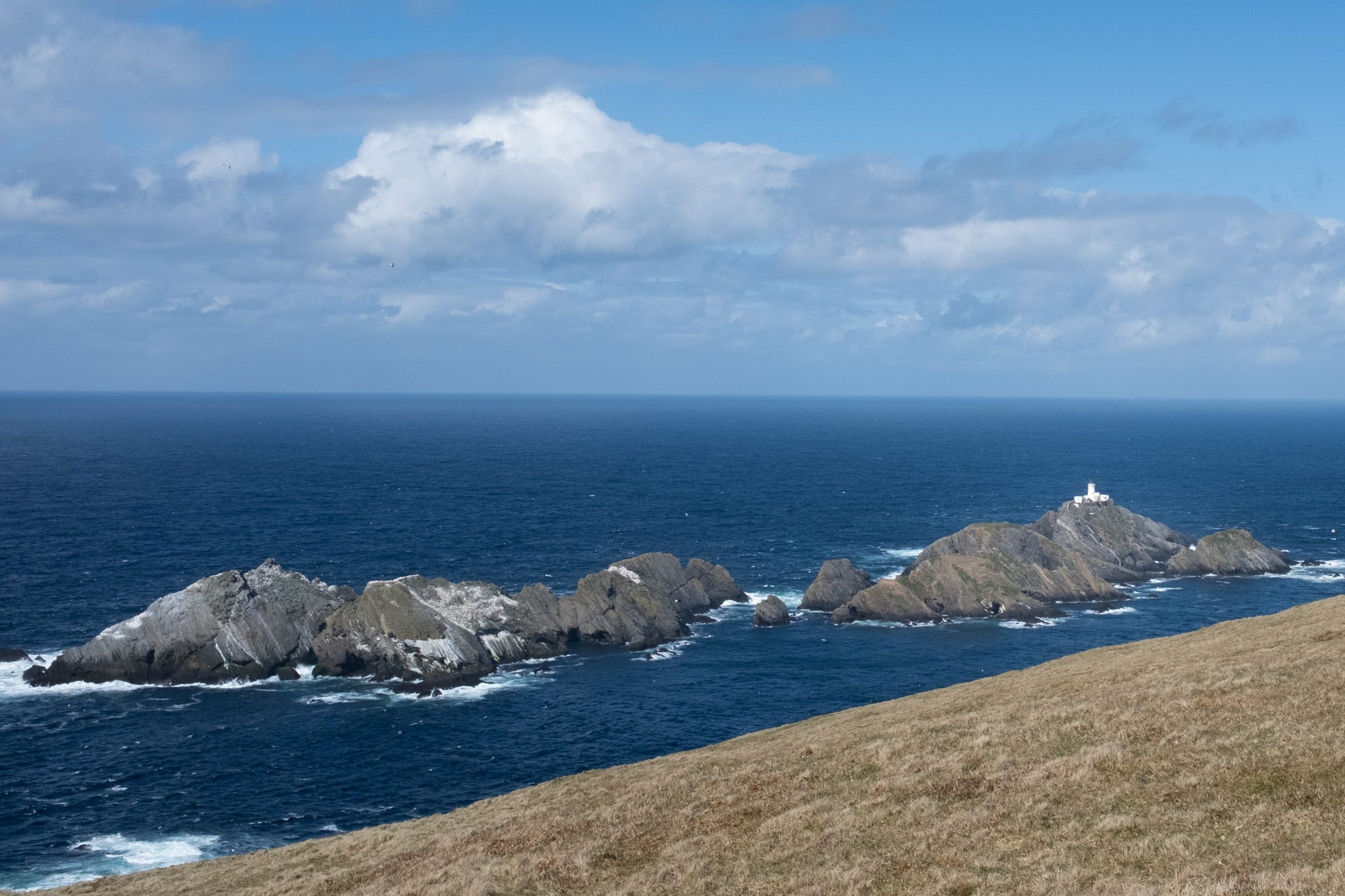
It seemed Hermaness was as good a place as any to begin. Apart from its geographical significance, there can’t be many more dramatic places in Britain. None that I’ve seen.
The cliffs, gneiss and schist, are 170 meters high, hacked and sucked and jabbed to bits. The ruins are laced with minerals, pressed into being beneath a mountain range hundreds of millions of years ago.
The sea besieged them that day. The cliffs rallied and thrashed their assailant. Booms of white spray on the gale. It seemed the giants would never end their fight.
We stepped back from the sheer edge and found a hollow to sit out of the wind. “To keep you going on your walk.” Dad read the inscription on his hip flask as he pulled it out. From his best man. We passed it between cold fingers. The whiskey was warm.
It was a significant moment for Dad. He had retired precisely fifteen hours before our flight—forty years of work finished forever with a pub crawl, a pair of silly glasses, tankards and plenty of backslapping.
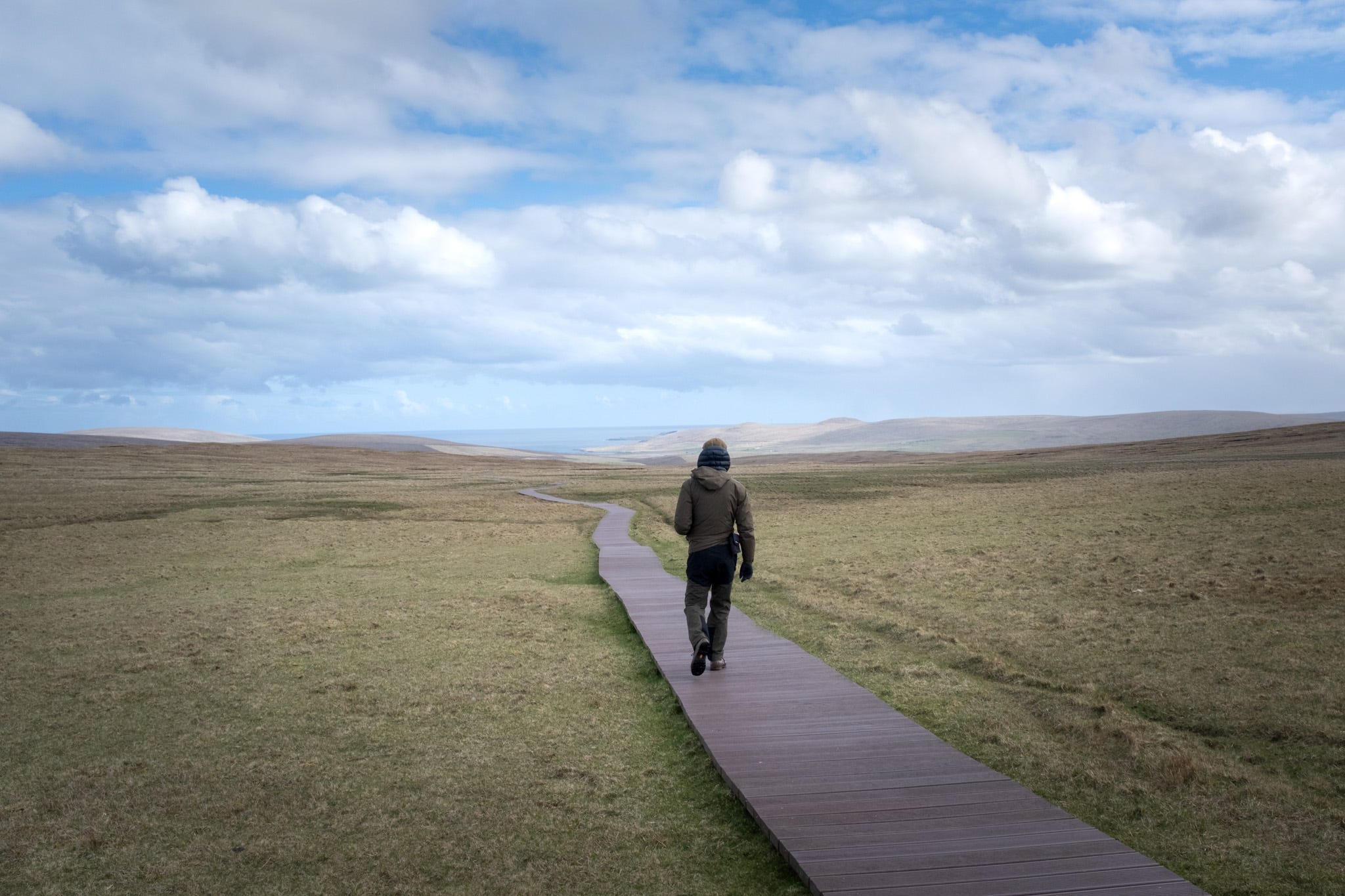
Now he planned to walk from here to the Scilly Isles off Cornwall. 1400 miles by foot. And occasional ferry, of course. I’d join him til the mainland, then we’d make our own ways from there. He by foot, I by thumb. But first, we had Shetland to traverse. A hundred miles top to bottom. Through hail and headwinds no less.
“We’d be quicker going by sea,” I said, looking down the coast. The line of land faded into the south. I’d heard that sailors here used to navigate by sensing tremors of the underlying swell, the “Midder Dye”, through the soles of their bare feet. We’d make it to Sumburgh Head in no time like that.
But Dad was incapable of such feats, he reminded me. Walking it was.
As we sat and watched the waves, it occurred to me that Dad’s journey was something of a causeway. A long, narrow path to link the mountains of corporate life to the gentler plains of retirement.
I’ve never retired, so don’t know much about it. But I have walked out of mountains before. Like the sailors and the Midder Dye, you feel the topography change beneath your feet. Suddenly, the mountains are gone completely and a new land is beneath you. Perhaps it would be the same for Dad.
Either way, we reasoned we shouldn’t linger in the hollow long. The weather changes quick up here. We got up and began.
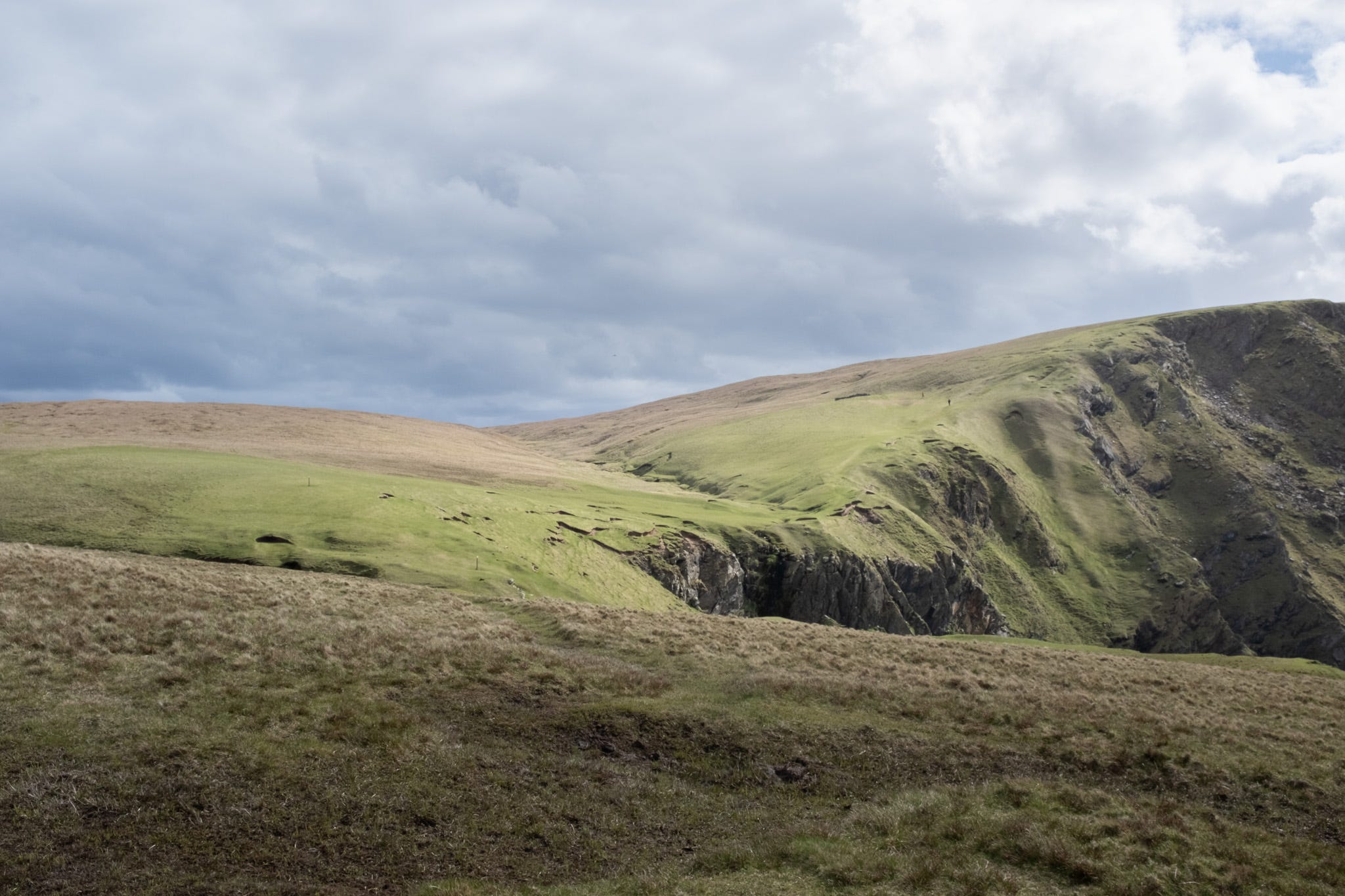
It wasn’t long before we passed two figures on the clifftop. They stood by tripods. Their black hoods were drawn tight around their faces, flecked with droplets. They said hello as we passed.
They were birders, English, and they appeared to be in heaven. Which is fair. Hermaness is a heaven, if birds are your cup of tea.
Indeed, you smell the gannets before you see them. A colony the size of Durham have made their rock a moving white cathedral. Its edges dissolve into the air. Their squarks as loud as the wind.
We spotted all kinds of others too. Guillemots like butlers in black and white. The fulmars were fighter jets. Kittiwakes and shags.
The dark shadows of skuas, bonxies, prowled the clouds too. The pirates of the air they call them, but there’s little romance about bonxies. They hammer the rarer birds, and nearly wiped out the gannets not long ago. Luckily, bird flu swept in just in time and hammered the bonxies back. The spread was helped by their willingness to eat anything, including each other.
The flu helped save the gannets, but also the puffins—“tammie norries” as they’re called in Shetland. I’d never seen a puffin before, but we must have seen fifty that afternoon. It’s not hard to see why they’re loved.
They wobbled playfully between the rocks, then soared to land like pleasure planes, hopping onto the quivering grass, smiling. You couldn’t help but smile with them.
We watched them for a long while. Then when the flask of whiskey was empty, we turned and began.
Top notch. I know a few hitchhikers in the US who will enjoy your book.
A wonderful read Nico. Informative and uplifting. What a lovely shared experience with your Dad. Great to hear that the book is almost there. The world definitely needs more hitchhiking!