

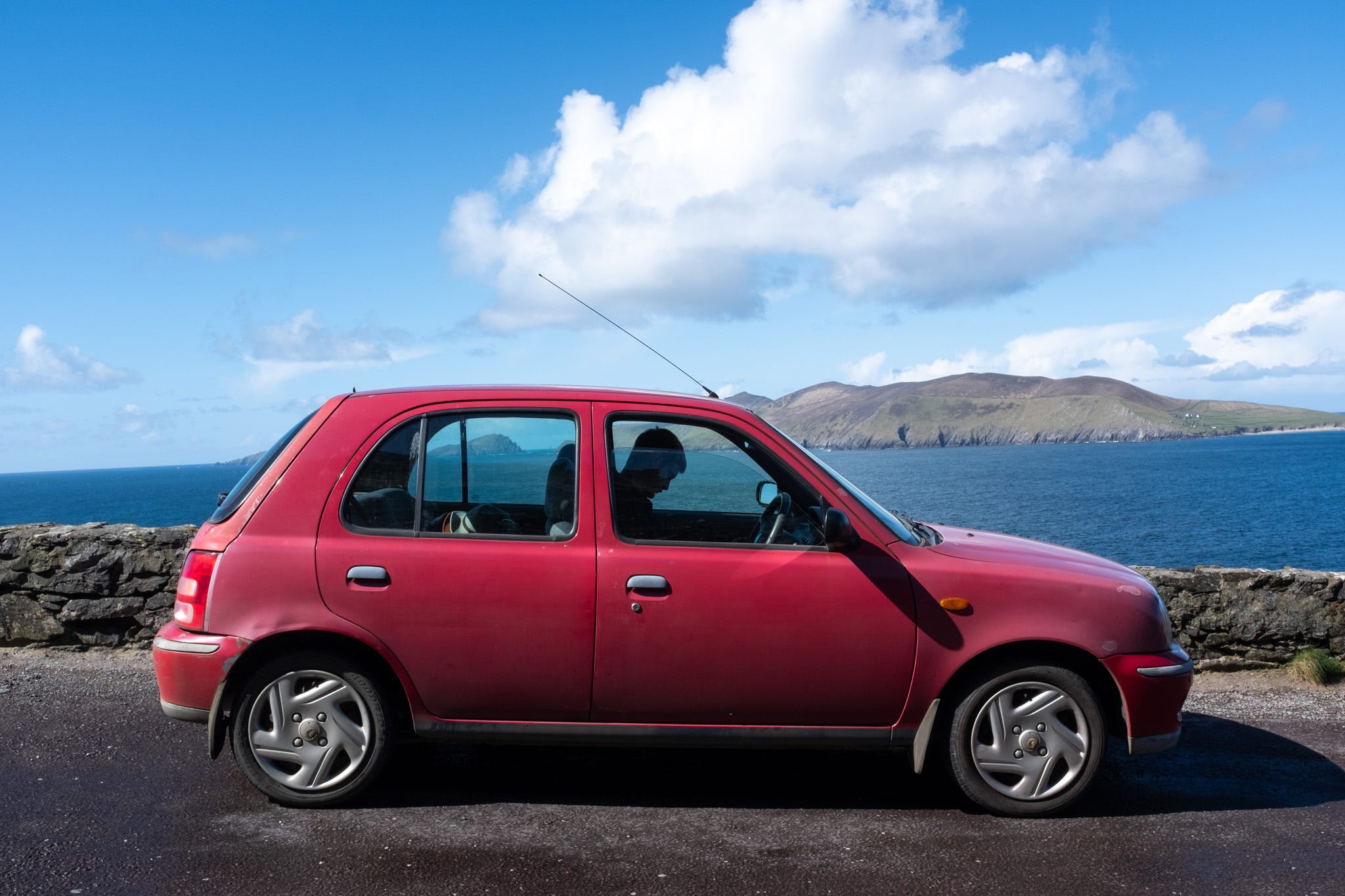
I interrupt this series on Shetland to bring some sad news: the family Nissan Micra was put down on Monday. Here’s a brief eulogy and an argument for why it is/was a genuinely unique vehicle.
There were two reasons why Richard Hammond had never reviewed a Nissan Micra before doing so with a paper bag over his head.
One was that he wouldn’t be seen dead in one.
The other was they’re only driven by “old people with straw hats and golf umbrellas velcroed onto the parcel shelf.”
Which, in 1999 at least, he was not.
The seats were a bit firm, he described when he at last got in, but not uncomfortable. Brakes a bit numb on the open road and a bit of body roll through the bends.
Though it drove fine, generally speaking, he concluded the car was too cute for real use. It was too “worryingly Noddy Land.”
He was wrong, of course.
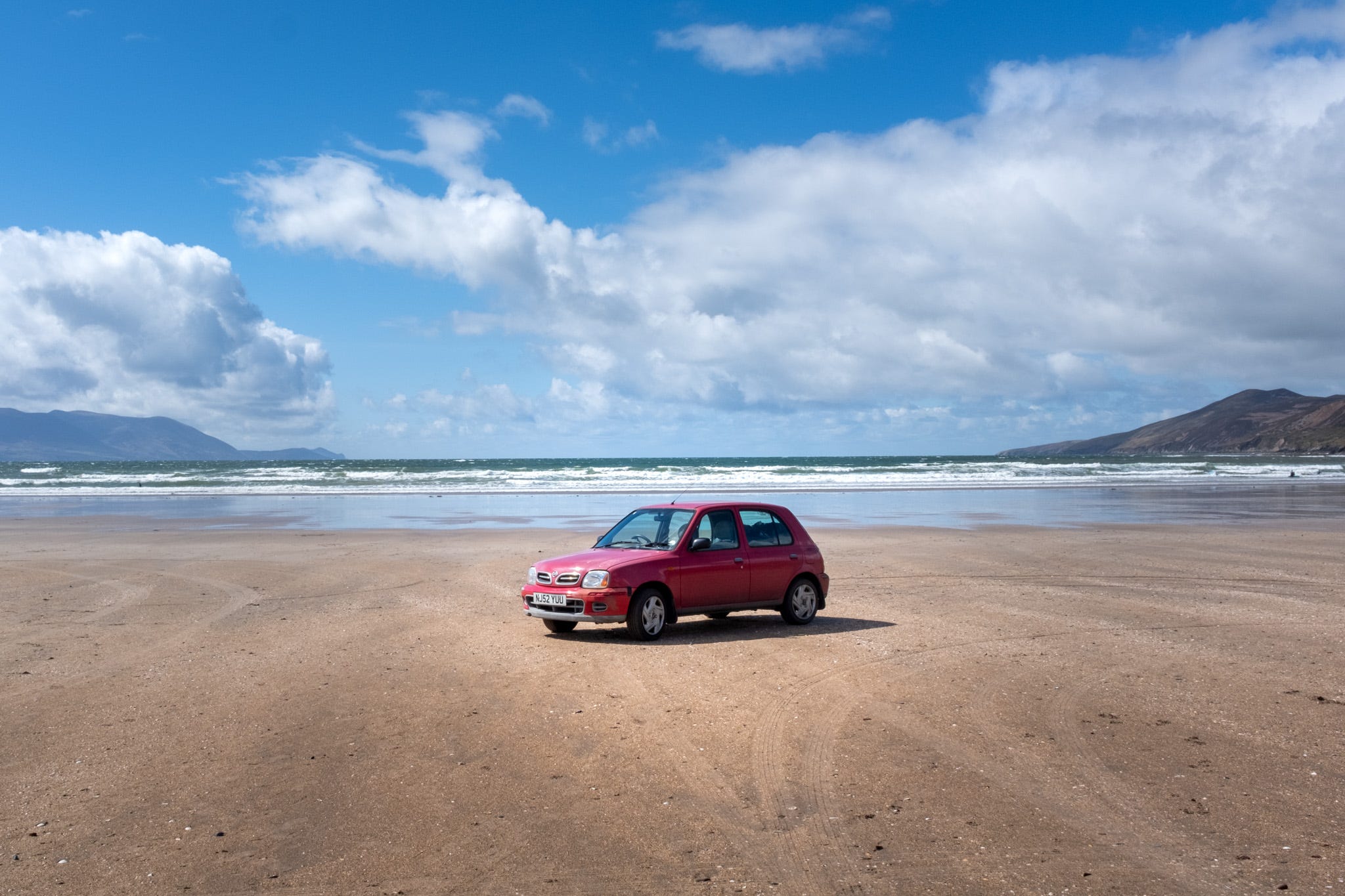
Driving a Micra is like sitting in the lantern of a lighthouse. It’s all glass around you, light pouring in. All the better to see the vast hunks of metal that come looming like container ships over your dingy.
There are often pseudo-communities on the roads, like vintage car owners who nod or flash as they pass each other.
But Micra owners are few and far between. Young Micra drivers even more so. There are so few in fact, that I only ever saw one other Micra being driven by someone under the age of about 70.
It was in Buckinghamshire. Theirs was red too, though it had gold hub caps. Spotting each other from a distance, there was a moment of surprise before a volley of honking and cheering and fist bumping. Then they were gone.
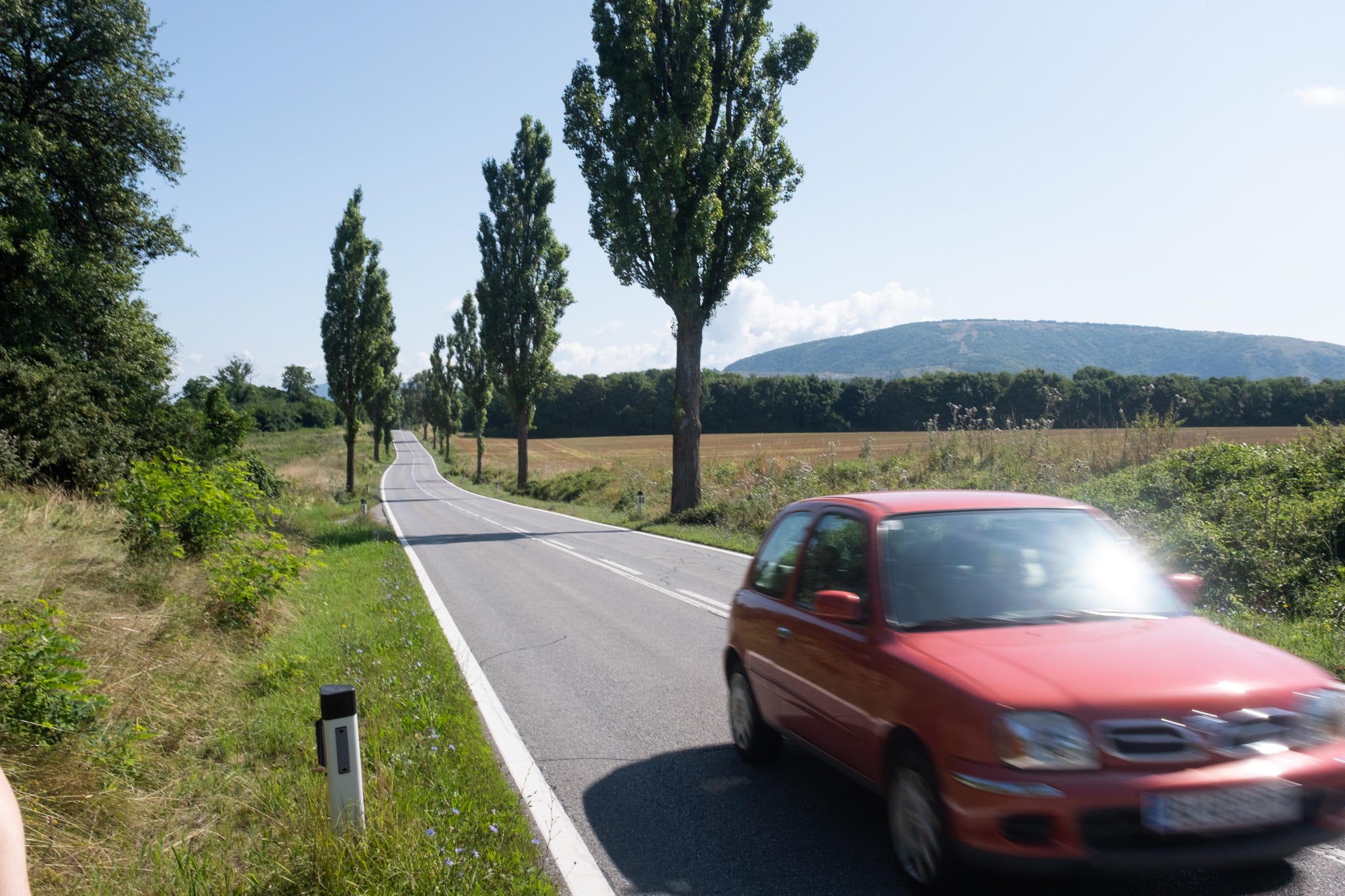
In the world of automobility, the Micra had once been a disruptor. Part of a new generation of young cars, upsetting the old hierarchy.
The first model came out in 1983, at the same time as the Corsa and Fiesta. They were marketed at the young and old. Cheap and easy to drive. Low powered.
Unlike the others, which could claim association with a wily fox, squirrel or hare perhaps, if the Micra was an animal, it would be a turtle.
There’s its obvious lack of speed, but its shape is also evocative of one too. The high cab and low, poking bonnet which makes you wonder how an engine could fit inside, an engine capable of moving several adults at almost sixty miles an hour.
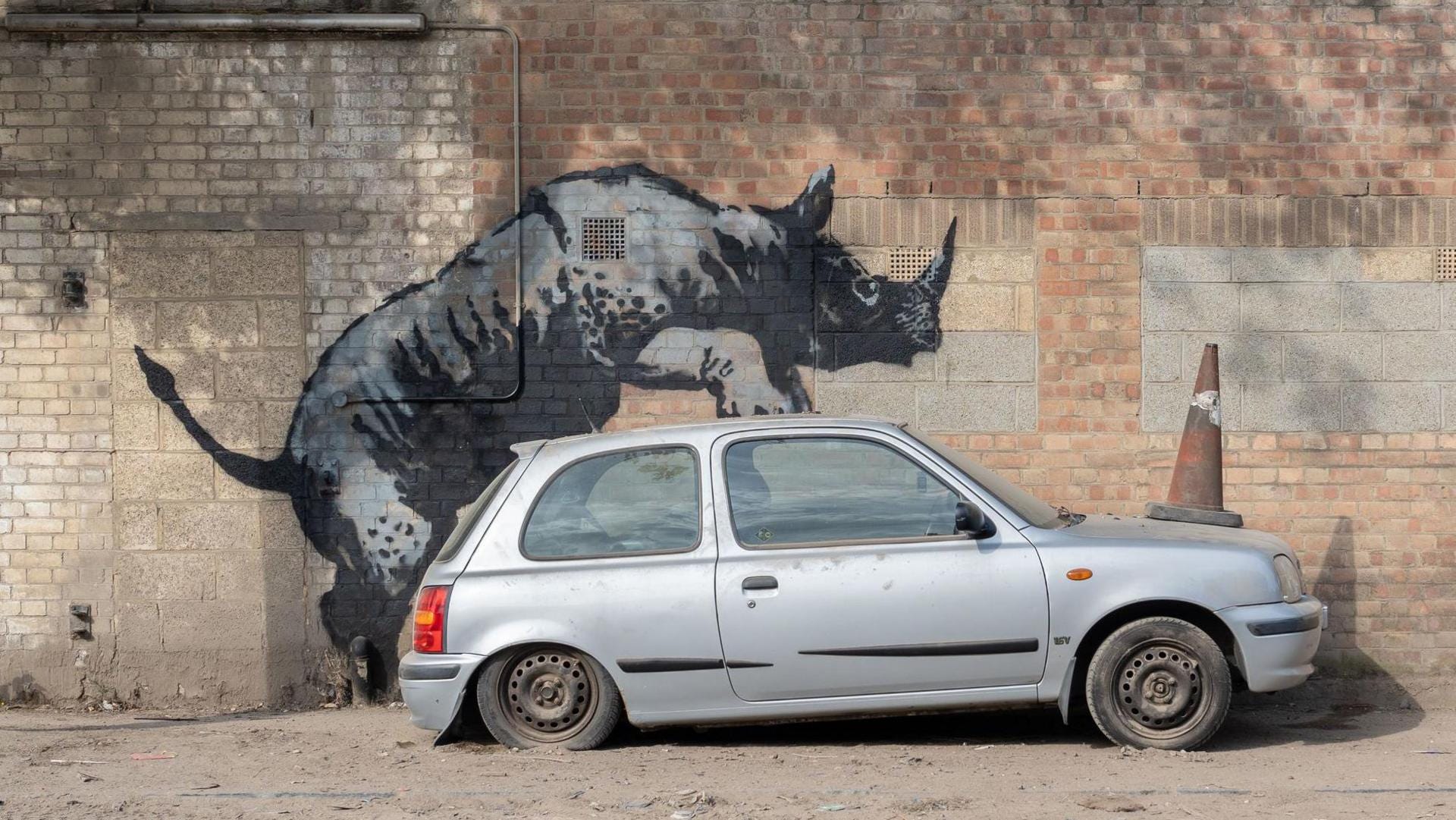
It seems befitting that one of the world’s best-known artists chose a Micra as the setting for one of his animals in London series.
In the piece, which appeared in Greenwich in 2024, Banksy stencilled a rhino mounting a discarded Micra.
Some say this was a piece about urban decay, but perhaps it had another meaning.
There’s a Bemba folktale in Zambia about a rhino and a turtle.
Much like Aesop’s hare and tortoise, this tale involves an arrogant rhino who challenges the turtle to a race to put him in his place.
The turtle knows it can not outrun the rhino, but it also knows the rhino is stupid. It sends four turtle friends ahead to each of the four river crossings on the course.
The race begins and the rhino steams ahead. But each time he reaches a river crossing, he finds the turtle has already beaten him to it. Furious, he eventually concedes.
In Banksy’s version, they have clearly made up.
Our Micra came to us by fate.
Built in Sunderland in 2002, Dad’s godmother, Anne, gave it to him seventeen years later when she decided she was too old to use it any more.
It was a beautiful reminder that in automobility terms, as elsewhere in life, there is a brief moment when old and young cross as they head in their opposite directions.
Nevertheless, the new arrival was originally met with quiet revulsion. It was used only for errands that guaranteed not being seen by anyone you knew.
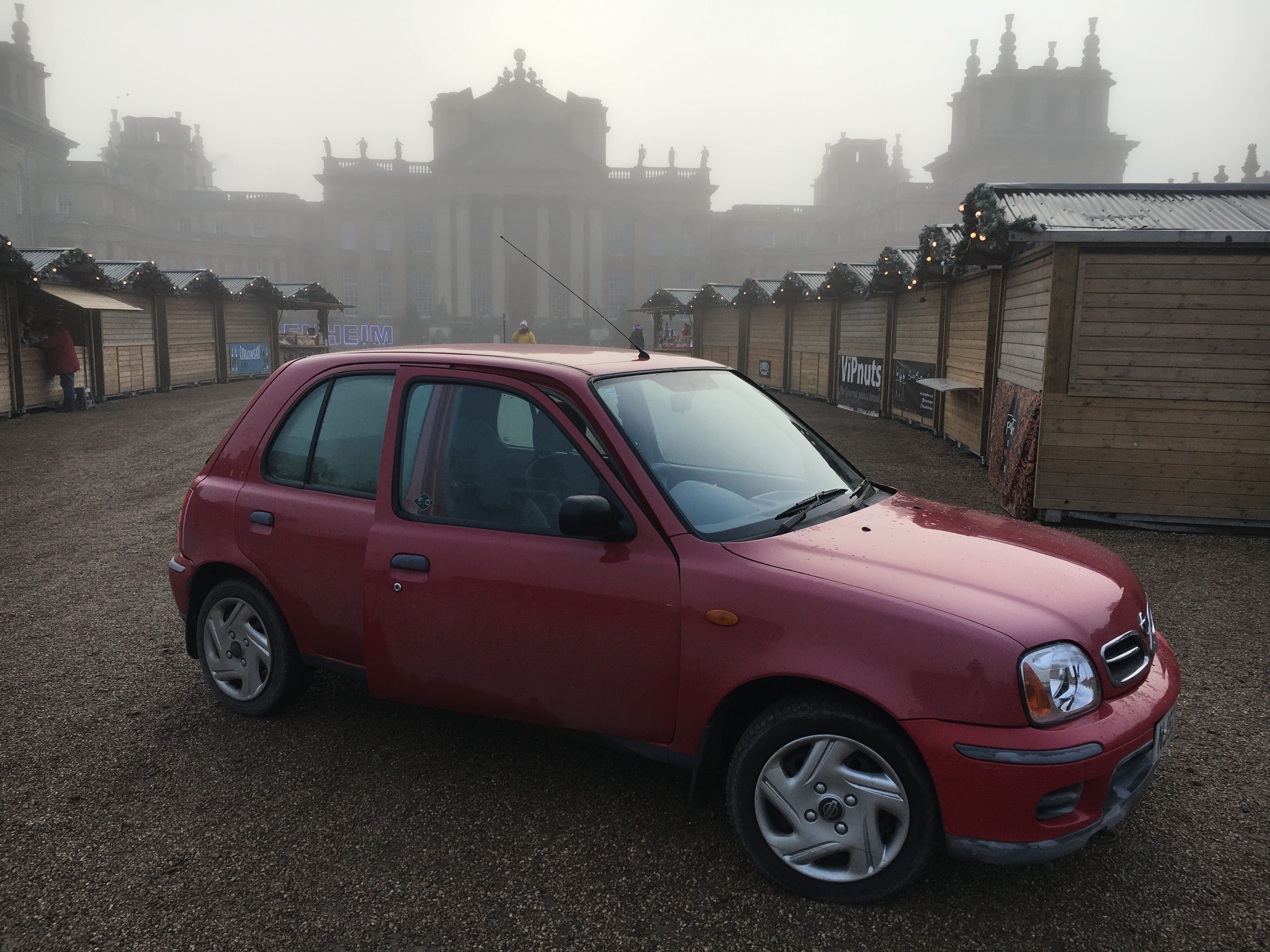
But slowly its previously ugly curves became graceful. Its ridiculous size rebellious. Its motorway whine melodic.
As many people do with older cars, I also began to appreciate its character. Worked out and took pleasure in pausing momentarily before slipping into third, or letting off the clutch ever so slightly before putting it into reverse to avoid a yelp from the gears.
Not having aircon didn’t matter. Neither did only being able to find one radio station—if you were lucky.
In fact, I found its lack of comfort served a purpose.
Roads and cars are remarkable things. They connect us all in a great big web. We can get in a car and drive anywhere on this island. With a short ferry we could drive in an unbroken line to Beijing, Beirut or Cape Town.
That freedom is extraordinary.
However, when cruising silently between the massaging white lines of a motorway, listening to Spotify or a podcast in a carefully managed temperate cab of a modern car, somehow the wonders of automobility are forgotten.
Not so in the Micra.
Zimming this way and that, nipping between lorries and Land Rovers and chunky SUVs, you’re reminded of the thrill of driving. Not in a macho, show-off kind of way as you would in a sports car, but in a childish way.
Children, however, grow up.
The Micra’s final trip last month was to the south of France. Although the wide, straight payage roads were somewhat wasted on the Micra, it was great to be buzzing along as ever.
But perhaps it was ominous that on our return, as we waited at the Calais tunnel terminal, one of our party was quite suddenly sick in a bin.
Two weeks later, the mechanic’s gavel came down.
It had failed its MOT. The chassis was completely rusted and rotten. No welder would touch it. In fact, we were told, it was a miracle we’d made it to France and back.
And so the Micra is finished. Never to be driven again. But as with all great things, it lives on, in my newfound appreciation of automobility, and in that old rhyme:
Roses are red.
Violets are blue.
NJ52 YUU.

I get it. We had red 1982 Toyota Starlet. It looked like a prototype to your Micra. It was bought during the days of the OPEC oil embargo, back when Nissan was still Datsun. It had good fuel economy, at least relative to other cars sold in the US at the time.
In 1985, we moved from the temperate climes of upstate New York to Las Vegas, Nevada. We bought another car with air conditioning before moving here for my wife and the soon to be arriving kids, but I, as the husband and dad, drove the Starlet for the next 19 years through the Mojave Desert summers without AC. It became a badge of honor.
Nobody, except our Toyota mechanic, ever heard of that model and we saw maybe one other over the years. It never rusted out, as cars don't do that here. It just wore out, being parked out in the elements all those years (the other car got to be parked in the garage), and parts were becoming impossible to find. It was a bittersweet farewell.
I drive a vehicle now with AC, but often, when driving alone, I drive around town with it off and the windows down, even in 110⁰F (43⁰C) or more, just for old-time sake.
Down the road... Mark
In Canada they don't even sell them any more!